
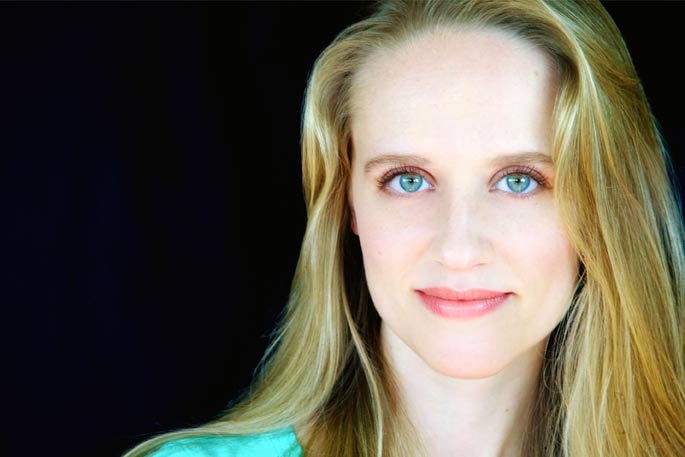
IVINS — It is an exceptional challenge to conquer at an epic scale. Directing in Utah’s largest capacity venue, against the majestic red rocks certainly qualifies for that. So does tackling a musical known world wide, and beloved by millions, many of whom will see the production of it. Pressure? Sarah Hartmann can handle it.
Editors Note: This article was delayed due to audio issues in the original interview recording. We appreciate Sarah Hartmann and Tuacahn’s patience. The full conversation is available on UTAJ’s YouTube channel, though some reverb remains in the audio.
With such a massive undertaking, where does one being? In our wide ranging conversation, Hartmann made one thing exceptionally clear. In her work, you start at the beginning. While there are filmed versions, international tours, myriad covers and even spoofs to draw from, Hartmann went back to the book by Victor Hugo. Multiple times in our conversation, in response to an inquiry, Hartmann responded, “can I read something to you?” These were quotes from a well worn, tabbed and highlighted copy of the book she had clearly spent copious amounts of time with.
On the first day of rehearsal, she shared the following quote from the book with her cast.
“This book [or in this case musical] is the march from evil to good, from injustice to justice, from the false to the true, from night to day, from appetite to conscience, from rottenness to life, from brutality to duty, from hell to heaven, from nothingness to God, hydra at the beginning, angel at the end”
This contrast – hell at the beginning, heaven at the end informed the entire process of creating this epic musical. Designers, actors, and the whole team was able to draw on that guiding principle through the creative process to inform choices. Whether in broad, ensemble driven ways, or in small, intimate moments that still needed to fill the cavernous stage.
Having worked with Tuacahn in the past on what Hartmann called a “dream job” directing Anastasia: The Musial, and last summer with Newsies, she’s already seen what it takes to utilize this stage space.
“One of the things I love about working at Tuacahn is just the epic scale of the landscape that the theatre is in.”
A deep understanding of the text was expansive instead of being restrictive. It give her cast and collaborators guideposts to operate with a balance of epic scale and intimate moment work. She referenced the multiple volume structure of the novel, the first of which is called and centered on Fantine. Understanding how to draw attention to each thread of this story’s tapestry allowed her to guide huge audiences to intimate moments. She used specific spacing to point to who the center of each scene would be.
“On the Tuacahn stage there’s something called the baffle. It’s this very edge of the stage — other theaters might call it a passerelle — where the actors can step up and walk, and they’re really close to the audience, as close as they can get. At the end of the prologue, Jean Valjean is standing right on that baffle and he rips his ticket: ‘Another story must begin.’
Then, during the beginning of Fantine’s section, right before “Lovely Ladies,” I have her standing in that same downstage-center place on the baffle. When we go to Paris ten years later, I have Éponine go to that downstage point on the baffle. Before the barricade, Marius is down at that point on the baffle. And at the very end of the show, after Valjean has died and has handed off his story — her story — to Cosette, I have her go to that downstage point. Now she’s the one carrying the story forward.
Directing professionals is fundamentally different work than working with artists in any other sphere. In this way, Hartmann described her role with a metaphor.
“I sort of think of myself, as director, as coming in with the overarching — I’m the lighthouse. Here’s where we’re headed. Here’s going to be our shape of how we get there. But then within that, together, every moment becomes this discovery as a group.
“There’s such a joy and delight in getting to be in a leadership position in an artistic collaboration as huge as a musical, and getting to have the members of your team come up and say, ‘Oh, what if—?’ and then you go, ‘Oh, I hadn’t thought of that.'”
Hartmann discussed her fantastic collaboration with creative team members such as music director Christopher Babbage who she described as “absolutely incredible.” In their conversations with actors, insights about how even a chord or descriptions in the sheet music impacted creative choices in the entire process.
In another instance, Hartmann pointed to a conversation with Annie Hardt, designer of wigs and makeup who told her, “I think I can make you a wig that can be cut onstage for Fantine.” Hartmann had no idea such a thing could be done and was thrilled to see a team member’s creativity impact the entire production.
So too for fight choreographer Jason Paul Tate who she credits for helping convey that the ABC boys are disorganized in their idyllic visions of revolution. This showed up in brawls that required specificity to work safely for the actors, but frenetic energy that made them compelling and visually engaging for the audience.
In a story dealing with challenging questions about God and mortality, right and wrong. To Hartmann, the experience was a gift from start to finish. In rehearsals, cast and creatives were able to share the deepest parts of themselves. Orchestrating Les Misérables at Tuacahn was not about controlling the show, but shining a light that cast, crew and creatives all contributed to. Until October 23, audiences can play an integral part as well in hearing the people sing.
MORE INFO: Les Misérables plays at the Tuacahn Outdoor Amphitheatre (1100 Tuacahn Drive, Ivins) through October 23rd, 2026. Tickets range from $53–$156 and can be purchased at https://www.tuacahn.org/.
FOLLOW US ON FACEBOOK, INSTAGRAM, and TIKTOK!
If you’re a director, producer or marketing contact who would like to have us review your show, please fill out this form.
If you have comments about this article, please fill out this form.