

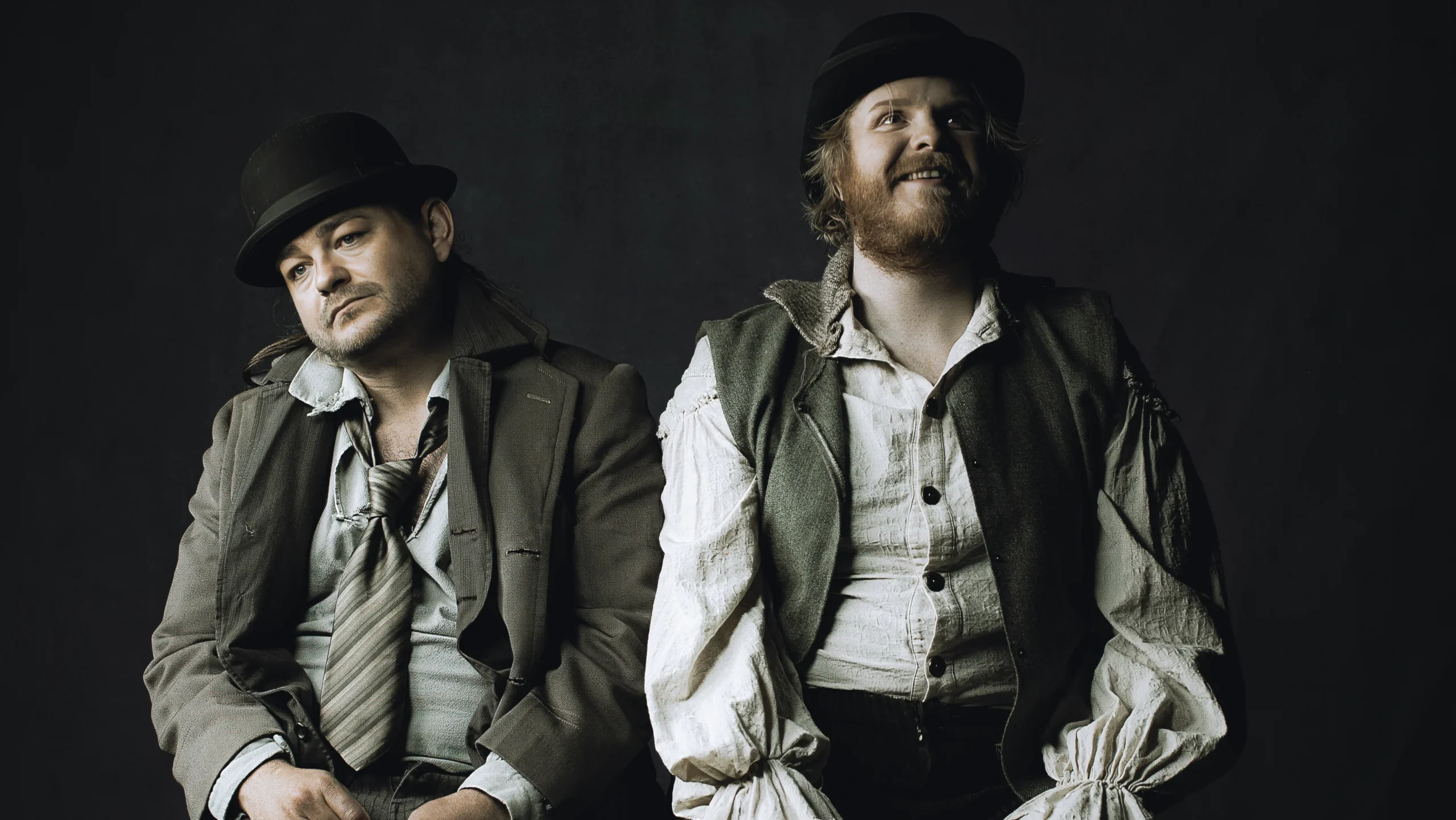
OGDEN — Samuel Beckett’s classic take on absurdist theatre, Waiting For Godot, was first published in 1952 so it was shocking to find only two prior reviews in our publication history. I was thrilled to see that Good Company Theatre was mounting it this summer, under the direction of Mark Fossen, and looked forward to taking the time to revel in the existentialism and questions of Beckett’s world.
The story of Godot follows (or does it?) the characters of Estragon or Gogo and Vladimir or Didi. These two men are down on their luck and waiting by a tree on a road for the mysterious Godot to appear and save them from their troubles. They wait for two days (or weeks or months or lifetimes) and during that time they are met by the great, rich and powerful Pozzo and his beat upon servant, Lucky. The final member of the cast is a messenger Boy who comes each day to inform the two that Godot will not come today, but will surely be there the next day. The show is full of complex questions like what is real and what is the meaning of life? Yet simple humor, slapstick humor, and physical comedy intermixed such profound queries. At a little over two hours, Fossen’s direction of this tale gives the audience the time to ponder what are we waiting for, and why?
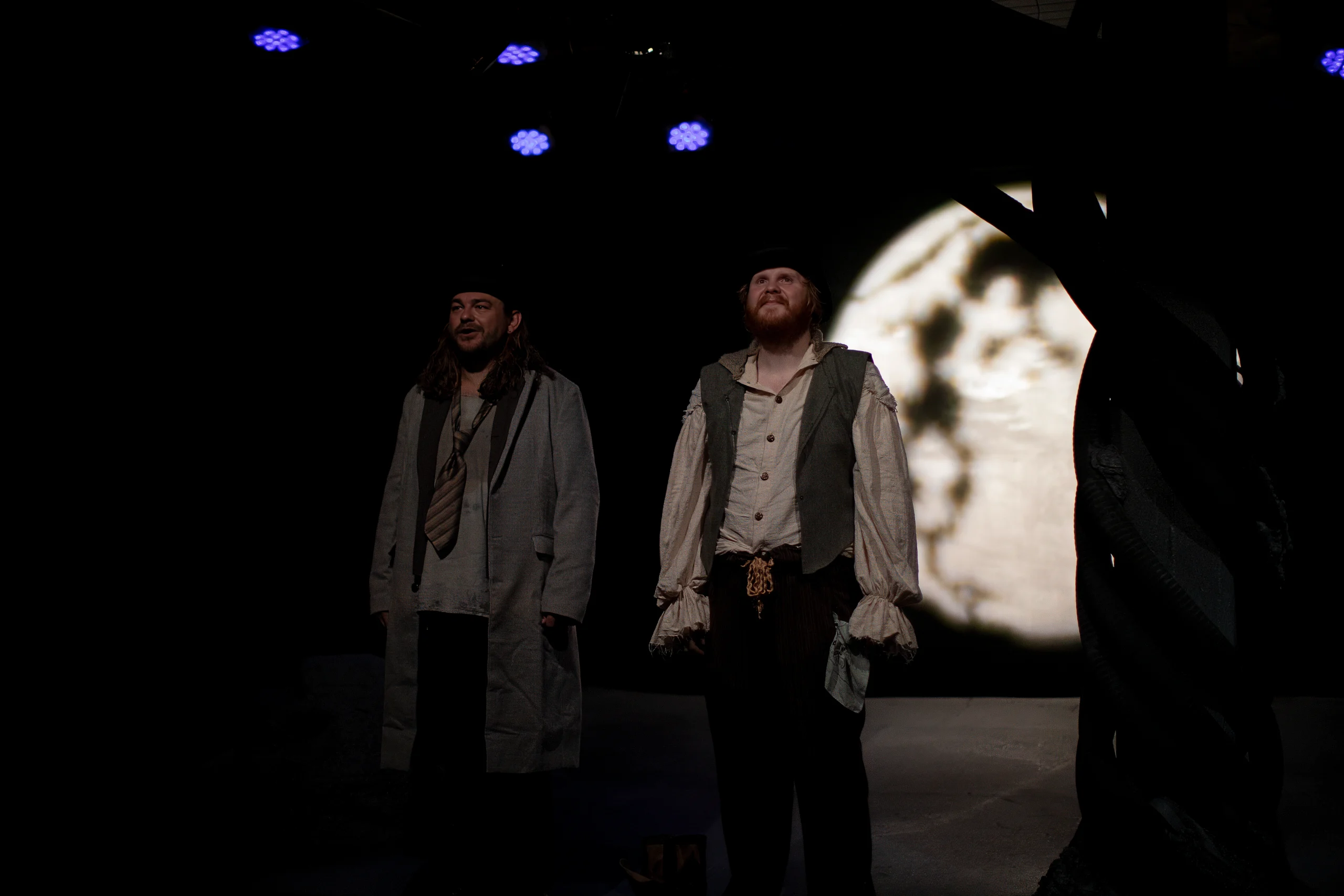
The first thing noticed is the set design by Raquel M. Jackson. Waiting For Godot is a simple play when it comes to setting, so one would not really expect there to be much by way of set. Good Company is a small theatre in an non-theatrical space, and has been plagued for years by the issue of the pillar stuck in the middle of the stage. Jackson used that pillar to make the tree that is pivotal to the show. This was to be expected, but the choice of how it was built and designed added to the eerie feel of the production. The addition of leaves in the second act, while subtle, added to the strange feeling of confusing the passage time. The second element of set design that was really intriguing was where the stumps or rocks on the road, seemingly made of mud, had the impressions of boots within them. This added to the absurdity of the show, and the confusion that Beckett meant within the script. Timothy Swensen’s lighting design added to the ambiance of the scenery, especially when day would turn into night, the only time within the script where time seems to make sense.
Arie Allred and Michael Scott Johnson are a great duo as Gogo and Didi. Allred has an excellent command of physical comedy. His ability to seem confused about what is happening, from his difficulty with removing his boot, to his confusion about what day or time it is, to why they are there and who they are waiting for has a level of almost youthful innocence. This is beautifully contrasted to Johnson’s more analytical nature. As they continue to struggle with their physical pains and frustrations, they continue to wait for this mysterious Godot to save them, and Allred gets frustrated but innocently comes back to Johnson’s belief that Godot will come and save them.
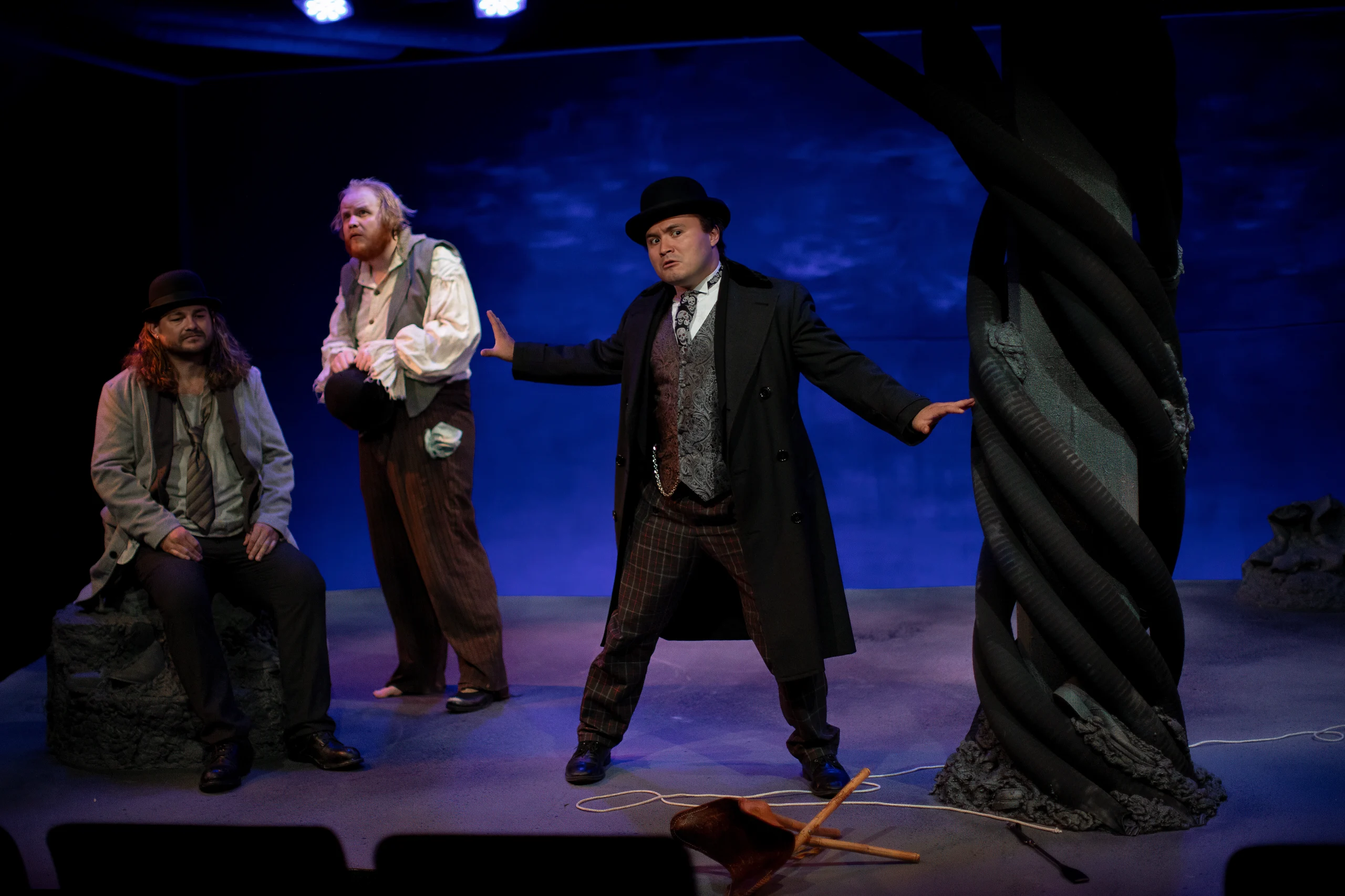
When Alvaro Cortez and Elio Patterson come in as Pozzo and Lucky, respectively, their contrast of characters is stark. Cortez is fantastic as the rich and pompous Pozzo in the first act, and the change of character in the second act is impressive. It was the performance of Lucky by Patterson that really made an impression. Showing how a person can be bullied, pushed around, and persuaded by the powers around them is part of the character of Lucky, and Patterson brought that to life in an unimagined way. Especially after the moment when Lucky is told to think, Patterson spoke the lines following in a precise way all while dealing with the physical and emotional bullying from the other cast members. Until this monologue was complete it was almost painful to watch this scene portrayed by Patterson because of the abuse that it represented to the character. Oscar Bateman-Rapier as the Boy brings the message at the end of every day. The way Bateman-Rapier delivers this message without much fanfare really brought home the point of, “Why are they waiting?”
In the end, Waiting for Godot leaves wonderings of what the characters were waiting for, and why they thought they needed to be saved. Which, I imagine, was Beckett’s point followed through by Fossen’s direction. And it makes me wonder even more what I am waiting for with a lot of things in my life, and what we all are waiting for with a lot of the things in our lives. And with how rare it seems that Waiting for Godot has been reviewed on local stages, why are you waiting on more reasons to get tickets to see Waiting for Godot?
MORE INFO: Waiting for Godot opens Thursday July 30th and then plays Fridays and Saturdays at 7:30pm and Sundays at 4pm through August 16th at the Good Company Theatre (2404 Wall Avenue, Ogden, Utah, 84401). Tickets are $18-$30 with student tickets available for $15 the day of the show. For the most up-to-date schedule, performance details, and official ticketing, visit the Good Company Theatre Website: https://goodcotheatre.com/.
FOLLOW US ON FACEBOOK, INSTAGRAM, and TIKTOK!
If you’re a director, producer or marketing contact who would like to have us review your show, please fill out this form.
If you have comments about this article, please fill out this form.