

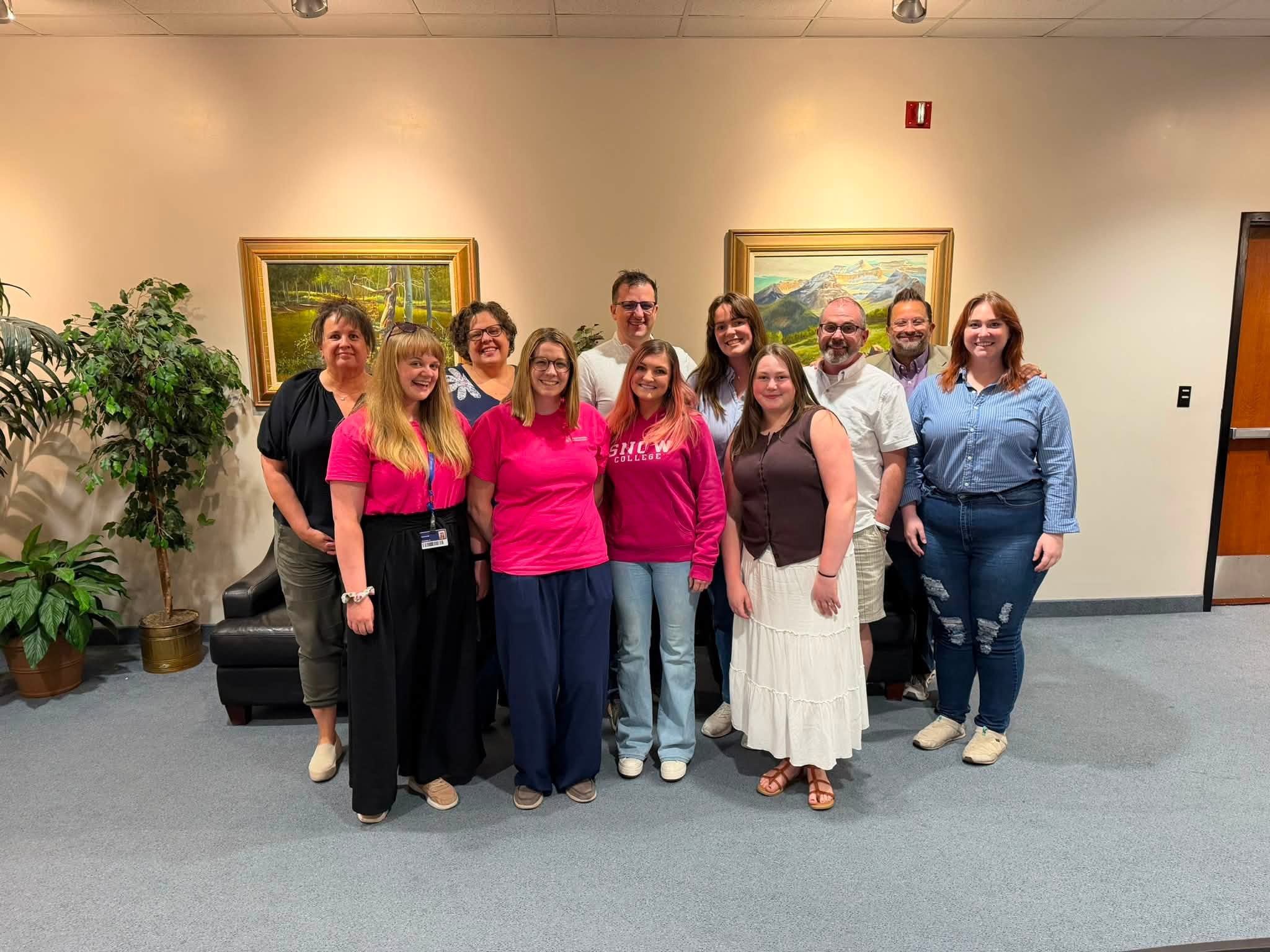
OREM — At least once a year, and more often when great opportunities arise, Utah Theatre Arts Journal (UTAJ) takes the opportunity to be hosted by Utah Theatre companies for a staff training event. These events allow us to bring some of our staff of more than thirty reviewers, editors, and schedulers together to talk about the craft of writing about theatre and learn from professionals who are fellow writers or creators of theatre. I’ve been so grateful for past meetings at Pioneer Theatre Company, Parker Theatre and West Valley Arts where we’ve received guidance from artists, journalists and educators such as Karen Azenberg, Nancy Melich and Andy and Jan Hunsaker. Our readers get the chance to read and scrutinize what comes up on the page in front of them, and this is our chance to come together to refine our process and craft.
This past week, thanks in part to a generous Orem CARE grant, we held a training at the SCERA Center for the Arts which has been Orem’s arts and recreational hub since the Great Depression nearly a century ago. Our training was led by SCERA leaders Adam J. Robertson (CEO) and April Berlin (Operations Manager). Our wide-ranging conversation discussed what distinctive markers SCERA values in its programming, what can help a theatre stay part of the fabric of a community for a century, and why, in a time when so many venues across the country are losing patronage, SCERA continues to have increasing numbers of audience members, participants, and volunteers who engage with them to make art. Central to SCERA’s continued success is a focus on family friendly programming and accessible offerings and reasonable ticket prices which make it possible to take an entire family to a high-quality show.
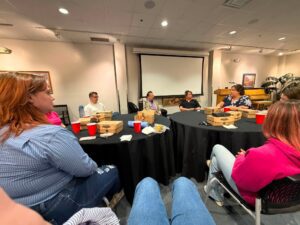
A key of our discussion came in Adam’s response to the opening question, “Why does SCERA, a community theatre, invite us to come and review shows even when our reviews are at times critical or negative?” . UTAJ doesn’t shy away from criticism. Across thousands of writeups UTAJ’s coverage is broadly about 70% positive, 20% mixed, and 10% negative. Robertson’s response focused on how inviting arts journalism can open doors even when there is criticism. Journalists have a role in creating a historical record and share valuable insights about productions.
Still, he pointed to the fact that review of a single production is not going to singularly take down nearly a century’s worth of investment in community and culture, but it may deter individual audience members from walking through the door and take a chance on the art that has taken many person-hours to create. This is, of course, both a pro and a con of the work.
Criticism and arts advocacy are not opposites, and UTAJ aims to do both in measure. The context, however, provided important framing for writers about their impact on artists, administrators and audiences. In understanding that live theatre can change from night to night, Robertson pointed to questions that ask where to direct criticism, whose responsibility the work is, and what thoughtful arts journalism does to reinforce the value of cultural experiences. As someone who makes and writes about theatre in Utah broadly, I was struck by the sheer amount of labor, institutional memory and community trust it takes to keep a theatre growing for generations.
SEE ALSO: Mark Brown’s Review of GUYS AND DOLLS at SCERA
UTAJ staff were enriched by this discussion which shed light on the inner workings of one of Utah’s most established community theatres. No field benefits from unmitigated optimism or sycophancy. Instead, having a community theatre express the value of asking for specificity, examples, and an eye on continuing to advocate for arts opportunities broadly while we maintain the critical eye and evaluation that audiences have come to rely on when making decisions about the use of their time and discretionary income. There’s a place to recognize ambition alongside shortcomings, to sing the unsung praises of those whose work is often only noticed when it goes wrong, and that in a community context, not every shortcoming requires equal page space.
In all things there is opportunity to see the good and the bad depending on what is sought for. Utah has desperately needed rain, and on Thursday, August 13 when we had the chance to meet, it rained immensely. Unfortunately, this rained out chance to see SCERA’s Guys and Dolls, but our hosts were gracious enough to invite us back, and we celebrate the great work done on Utah stages and look forward to the next century of great art in our communities.
FOLLOW US ON FACEBOOK, INSTAGRAM, and TIKTOK!
If you’re a director, producer or marketing contact who would like to have us review your show, please fill out this form.
If you have comments about this article, please fill out this form.